

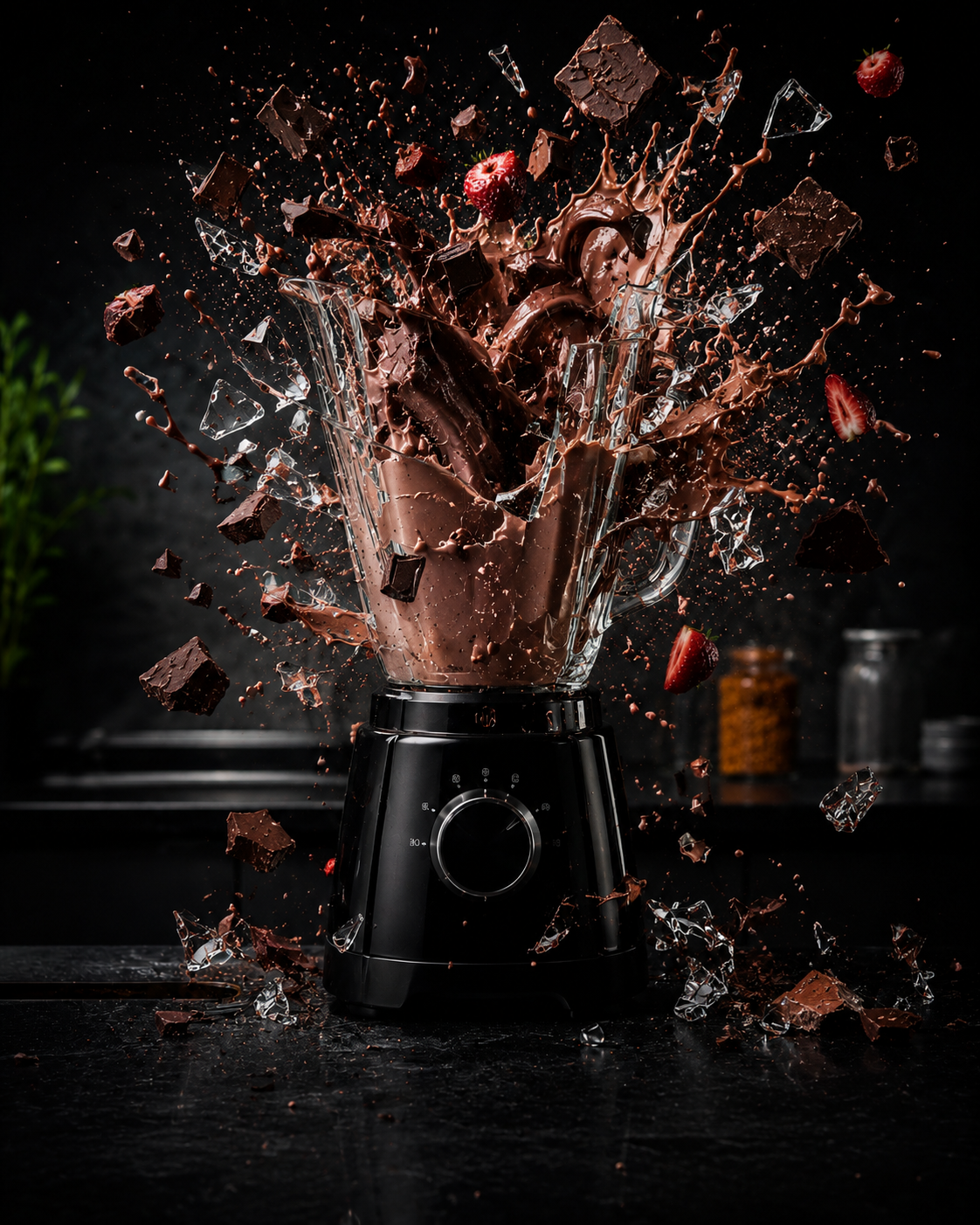
The Death of the Sweet Protein Shake: Why Fitness Is Finally Getting Savory
Chocolate fudge brownie at 7am. Strawberry cream after leg day. The supplement industry has been peddling dessert for decades. Something is finally changing.
Open any gym bag in America and there's a reasonable chance you'll find a shaker bottle with a faint ring of something brown around the rim. Chocolate. Or "double chocolate." Or "dark chocolate fudge." Or — if whoever owns the bag got adventurous — birthday cake.
The supplement industry has spent forty years convincing people that protein should taste like a child's birthday party. And for a long time, the logic held: make something sweet enough, and people will choke it down regardless of the chalky texture, the artificial aftertaste, and the slight existential sadness of drinking a milkshake-flavored product at six in the morning while standing in a parking lot.
That logic is starting to crack.
The Flavor Fatigue Is Real
Walk through any serious supplement retailer — physical or digital — and you'll notice something: the flavor options have become almost satirical. Cotton candy. Cinnamon roll. Fruity cereal. Peanut butter cup. The names keep getting longer and more elaborate, as if the answer to diminishing palatability returns is simply more dessert references per SKU.
It isn't working the way it used to.
Consumer research tells the story clearly. In 2024, 61% of Americans increased their protein consumption — a jump from 48% just five years prior. High-protein eating became the single most popular dietary pattern in the U.S., with one in five Americans actively following it. Protein is everywhere, in everything, and demand shows no sign of slowing.
But the format of that protein is shifting. A growing share of consumers — particularly the core fitness demographic of Millennials and Gen Z — report fatigue with sweet, shake-based formats. They want protein that fits into a real meal, not a dessert approximation consumed under fluorescent lighting. Food industry analysts covering the 2025 Natural Products Expo West noted a visible inflection point: protein was still the dominant trend, but increasingly appearing in savory, culinary formats — sauces, broths, condiments, meal bases — rather than the sweet shake and bar formats that have dominated supplement shelves for decades.
One award-winning product at that same expo delivered 80 grams of protein per jar through a pasta sauce built on collagen, bone broth, and whey. It won recognition not as a novelty but as a signal — proof that the market is actively rewarding companies willing to put protein somewhere unexpected and actually useful.
What Sweet Protein Actually Costs You
Beyond the flavor fatigue, there's a physiological argument against the endless sugar-and-powder cycle that the supplement industry has built its business on.
Most commercial whey protein concentrates and isolates lean heavily on artificial sweeteners — sucralose, acesulfame potassium, aspartame — to hit the flavor targets consumers have been conditioned to expect. These aren't inherently dangerous in modest quantities, but they do complicate something important: they train your palate toward sweet and away from savory, which makes whole-food protein sources — eggs, fish, legumes, meat — feel less appealing by comparison. The shake becomes a crutch not just calorically but psychologically.
There's also the blood sugar question. Many flavored protein products include maltodextrin, dextrose, or other fast carbohydrates as bulking agents or flavor carriers. The result is a product that spikes insulin, drops energy, and leaves users reaching for food an hour later — the opposite of the sustained satiety that post-workout nutrition is supposed to deliver.
Savory protein formats sidestep most of this. A warm, umami-forward sauce built on a real protein matrix — one that includes dietary fiber, healthy fats, and natural electrolytes — behaves differently in the body. It signals satiety through multiple pathways. It integrates with a real meal rather than replacing it with something that merely resembles food.
The Cultural Shift Has Already Happened in Every Other Category
It's worth noting that fitness nutrition is simply catching up to what the rest of the food world figured out years ago.
Premium coffee moved away from syrup-drowned Frappuccinos toward single-origin, bitter, complex flavors. Craft beer moved away from light lager toward IPAs, sours, and barrel-aged stouts with actual taste. The most prestigious restaurants in the world have spent a decade rehabilitating umami — fermented, aged, briny, deeply savory flavors — as the pinnacle of culinary sophistication.
Protein supplements are the last holdout of the dessert-flavoring era. And the holdout is ending.
High-protein condiments are not a fringe experiment. Industry analysts tracking the sauces and spreads category have flagged protein-fortified condiments as an emerging growth segment, driven by consumer demand for functional nutrition that doesn't require a separate "supplement moment." People want their macros to arrive in formats they already know how to use — poured over rice, stirred into a bowl, ladled over whatever protein they cooked that night.
Post-Workout Doesn't Have to Mean Post-Dessert
There is something fundamentally misaligned about finishing a hard training session — something physical, sweaty, and intensely real — and immediately rewarding yourself with something that tastes like a birthday cake.
A warm, savory protein sauce hits differently. It signals a meal. It triggers the actual satiety mechanisms that sweet flavors often bypass. It gives the brain and body what they're actually asking for after hard exercise: real food.
The stack that makes this possible — complete protein from a whole-food source, collagen peptides for connective tissue recovery, healthy fats from coconut for sustained energy and mouthfeel, naturally occurring electrolytes — is nutritionally serious. It isn't a candy bar with protein powder mixed in. It's something closer to what sports nutrition should have been from the beginning.
The sweet protein shake had a good run. Forty years is a long time to sell chocolate-flavored powder to people who needed chicken.
But the gym bag is getting a new resident. And it tastes like dinner.
Leave a comment
This site is protected by hCaptcha and the hCaptcha Privacy Policy and Terms of Service apply.